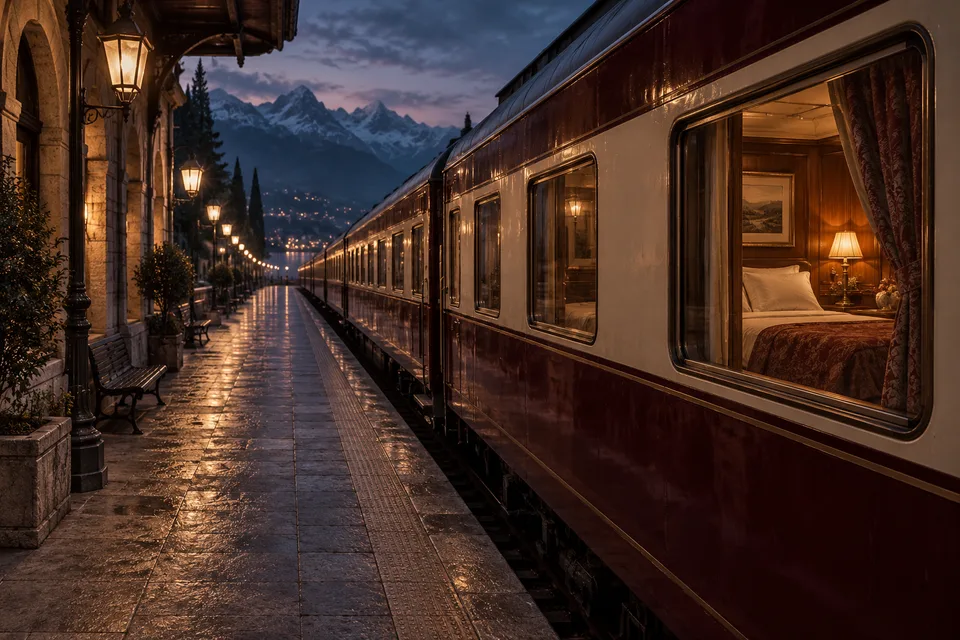
The romance of the night train begins with a pleasing exchange. Leave one city in the evening, sleep while the distance passes and arrive in another by morning. Travel time becomes something other than hours removed from a holiday. The railway appears to provide both transport and a temporary bedroom.
That is a distinctive product, and a demanding one. The train must offer an appropriate place to sleep while finding a path through a network used by other trains and maintained by other organizations. The passenger’s timetable, the railway’s timetable and the journey’s commercial timetable have to agree closely enough for the promise to work.
The revival is real in specific routes and investments. European Sleeper’s press record documents the launch of its Paris–Brussels–Berlin service in March 2026. ÖBB’s fleet information describes the introduction of new-generation Nightjet equipment on selected routes. Neither example means that every European city pair has a daily sleeper or that every night train offers the newest cabins.
This is where a useful travel story should begin: with a service and a date. The evocative route map introduces possibilities. A workable trip emerges when the traveler checks the train actually running, the accommodation offered and the day on which it can be used.
The passenger’s clock
Take an imaginary traveler with an evening free and an appointment late the next morning. An overnight train might suit them very well. Their calculation includes the journey to the station, boarding, sleep, arrival and the route to the appointment. The train’s scheduled running time is only one part of the useful travel time.
Arrival can create an awkward interval. A morning platform is not necessarily a hotel room, and accommodation check-in may come much later. A traveler with luggage needs a plan for the hours between. The sleeper can avoid a hotel night on one side of the journey without removing every need for rest, storage or a shower on the other.
Sleep also differs by accommodation. A seat, a couchette and a sleeping compartment are different experiences, even if all appear under the same night-train search result. A lower fare should be interpreted alongside the space and privacy provided, not as the price of an identical overnight service.
Nightjet’s couchette and Mini Cabin description distinguishes shared compartments from compact individual spaces and explains that equipment varies. The Mini Cabin is an inventive response to the solo traveler’s desire for privacy, but its compact dimensions and luggage arrangements belong in the description. A photograph of a larger sleeping compartment is not an accurate stand-in.
Companions change the decision. A family may value keeping a group together; a solo traveler may value separation. Someone sharing with unfamiliar passengers has a different expectation from someone paying for a private compartment. The suitable choice follows the traveler rather than a ranking in which the newest design wins for everyone.
That makes the packing decision unusually specific. A passenger in a compact individual cabin should check its locker and bag arrangements before choosing a suitcase; a group booking a compartment needs to consider the shared floor space. The journey can be comfortable without offering the storage or freedom of movement suggested by a photograph of a different carriage.
The honest description of the sleeper is therefore a particular overnight arrangement. It offers a chance to sleep while moving, with conditions that depend on the train, compartment and traveler. No atmospheric photograph can guarantee how rested an individual will feel the next morning.
A weekday can decide the whole itinerary
Frequency deserves as much attention as speed. A train that suits the route but operates on only some nights asks the traveler to organize the rest of the trip around it. That may be easy for a flexible holiday and difficult for a fixed event.
European Sleeper’s current timetable separates its standard operating patterns from date-specific information and warns that works can alter the standard schedule. In the standard Paris–Berlin pattern checked in October 2026, ES 475 leaves Paris on Tuesdays, Thursdays and Sundays; ES 474 leaves Berlin on Mondays, Wednesdays and Fridays. The direction matters. A Tuesday departure from Paris does not imply a Tuesday return from Berlin. The operator explicitly separates that pattern from engineering changes, so the chosen date still needs checking.
Frequency also affects recovery from a missed service. A daytime route with several departures may offer another opportunity shortly afterward. A less frequent sleeper can present a much larger gap. The traveler should understand the alternatives before treating an overnight booking as a guaranteed bridge between two tightly arranged days.
The comparison with flying or daytime rail needs the same care. Door-to-door time, transfers, accommodation needs and the purpose of the trip matter. A night train may make productive use of sleeping hours; another traveler may prefer a shorter daytime journey and a normal bed. Both can be rational choices under different circumstances.
The railway’s clock
While the passenger hopes the night will disappear into sleep, the railway is operating a complex service. Track capacity, engineering work, rolling stock and border-crossing arrangements influence the timetable. Overnight hours are not an empty interval available without competing uses.
ÖBB Infrastructure’s 2026 network statement describes capacity allocation and the effects of planned construction. It is a reminder that the passenger service depends on infrastructure decisions as well as demand for beds. A compelling commercial proposal still needs a workable train path.
Maintenance creates a particularly visible tension. Passengers may see fewer trains at night and imagine plentiful capacity. Railway managers may use those hours to carry out work that keeps the network functioning. A route therefore needs a plan for periods when its ordinary path is unavailable, whether through altered times, diversions or temporary changes in service.
The journey can also span several rail systems. Problems in one part can affect the whole overnight promise. The passenger experiences one ticketed trip, while the operation may depend on coordination among several parties. The task is to make that coordination reliable enough that the traveler need not understand its internal complexity.
Rolling stock brings another clock. New trains must be ordered, delivered, authorized and maintained. An announcement about future equipment should be distinguished from vehicles actually in service. ÖBB’s 2025 annual-report presentation, with an April 2026 fleet snapshot, separates the stock recorded at that date from the order and expected deliveries. Those are dated fleet figures, not a live count for every departure today.
For the traveler, the implication is straightforward. Confirm the accommodation offered on the actual train. The arrival of a new generation is a development across a network, not a promise that all old equipment vanishes on the same day. Service descriptions should identify which features belong to which carriage.
Disruption information needs to remain connected to booking. A passenger deciding months in advance can encounter changes later. The useful service provides a way to check the journey again and understand the updated plan. ÖBB’s timetable tools include current connections and route information, supporting that continuing check rather than a once-only reading of a printed map.
The commercial clock
A sleeper supplies a limited number of places in several accommodation categories. The price and availability on a particular date depend on that inventory and the operator’s offer. An advertised starting price describes a possibility within an offer, not the guaranteed price of the compartment a traveler wants.
The booking should therefore make the full arrangement clear: category, shared or private use, reservation, relevant fare conditions and the services included. A cheap initial search result can become a different proposition when the traveler selects privacy or a particular berth. Comparing the final suitable offers is more useful than comparing promotional minima.
A rail pass does not remove the accommodation task. Nightjet’s Interrail and Eurail information explains the additional reservation fee for the booked place. Interrail’s reservation guidance also distinguishes pass travel from required reservations. A pass can provide travel entitlement without creating a bed in a sold-out train.
The operator has to finance more than movement. Overnight accommodation needs cleaning, bedding, staff and servicing between trips. Space devoted to beds is space unavailable for ordinary seats, and a train’s use pattern differs from a daytime service. These are reasons the business cannot be judged simply by whether a popular departure fills up.
Successful demand and successful operation are related questions. A service can attract passengers and still face difficult infrastructure, equipment or cost conditions. Likewise, a well-designed new cabin cannot by itself generate a route with suitable timing and dependable demand. The vehicle is part of a business operating within a railway.
This makes continuity valuable to passengers. A route that remains dependable across booking seasons helps people organize travel around it. A new announcement creates excitement; sustained timetables and usable information create a habit. The revival’s more important achievement may be making the sleeper ordinary enough to trust.
The promise must include who can board
Accessibility is a material part of the overnight offer. Getting assistance onto a train is not the same as being able to move through it, use facilities or occupy a suitable compartment. The complete arrangement needs to work for the individual passenger’s requirements.
European Sleeper’s accessibility page currently states limitations in its trains, including the lack of full facilities and the inability to move through them in a wheelchair. It describes some available assistance and directs travelers to customer service. These conditions should be visible before an evocative claim about effortless travel invites a booking.
That is a significant limit to a transport service, even if its route is attractive and its broader revival is welcome. Presenting it clearly helps people make a real choice. It also shows where investment and improvement have work to do. A modern booking interface cannot compensate for a physical journey that remains unsuitable.
Stations and onward transport complete the chain. Departure and arrival assistance, platform access and the next connection should be considered together. A satisfactory cabin can still be part of an unsatisfactory trip if the traveler cannot reliably reach or leave it.
Keep the romance, improve the ordinary journey
The sleeper’s appeal does not need to be deflated. It offers a distinctive way of experiencing distance and can fit a journey remarkably well. The useful response is to make the conditions of that experience clear enough that the right passengers can plan it successfully.
That means naming the train and date, understanding the accommodation and leaving appropriate room for the rest of the travel day. It means treating an opening announcement, a fleet investment and an operating timetable as different stages. It means putting accessibility and disruption information beside the pictures of breakfast at a window.
For the industry, the goal is a repeated service that holds those details together. The railway’s clock, the passenger’s clock and the business clock will never become identical. They need to align well enough for an evening departure and a morning arrival to become a dependable choice.
Then the romance has something stronger beneath it: an ordinary journey that works.
Sources & context
This article draws on the sources linked in the text. Analysis and illustrative scenarios are identified separately from reported findings.
- press record
- fleet information
- couchette and Mini Cabin description
- current timetable
- 2026 network statement
- 2025 annual-report presentation, with an April 2026 fleet snapshot
- timetable tools
- Interrail and Eurail information
- reservation guidance
- accessibility page